
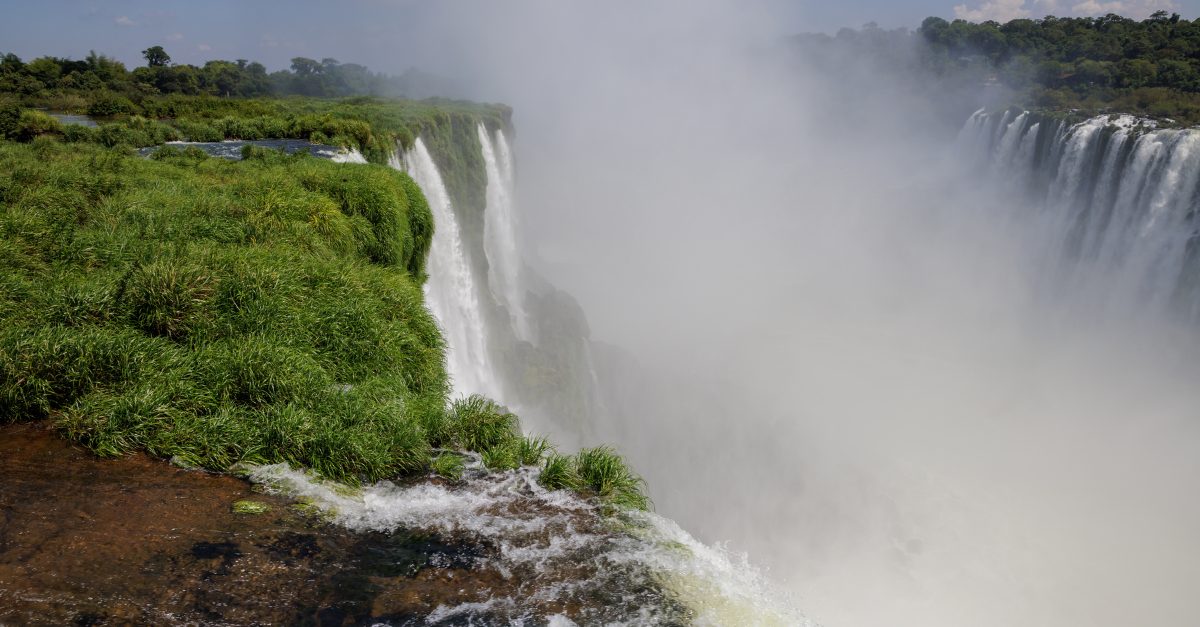
Iguazú Falls (Northeast Argentina)
Plan two days to visit Iguazú Falls. Give a full day to the Argentine side, where you find the trails and the Garganta del Diablo, and half a day to the Brazilian side to enjoy the panoramic views. The flight from Buenos Aires takes about two hours.
Short answer: plan two days to visit Iguazú Falls. Give a full day to the Argentine side, where you find the trails and the Garganta del Diablo, and half a day to the Brazilian side to enjoy the panoramic views. The flight from Buenos Aires takes about two hours.
Iguazú is one of the great natural sights in the world, a huge system of waterfalls in the subtropical jungle at the border between Argentina, Brazil and Paraguay. I have been to Iguazú and I recommend it without hesitation. Here is how to plan it.
Argentine side vs Brazilian side
| Argentine side | Brazilian side | |
|---|---|---|
| Experience | Trails, close-up views, walkways | Wide panoramic views |
| Highlight | Garganta del Diablo | The panorama of the falls |
| Time | A full day | Half a day |
| Best for | Closeness and variety | Photos and the big picture |
If you have time, do both. If you only have one, I would choose the Argentine side.
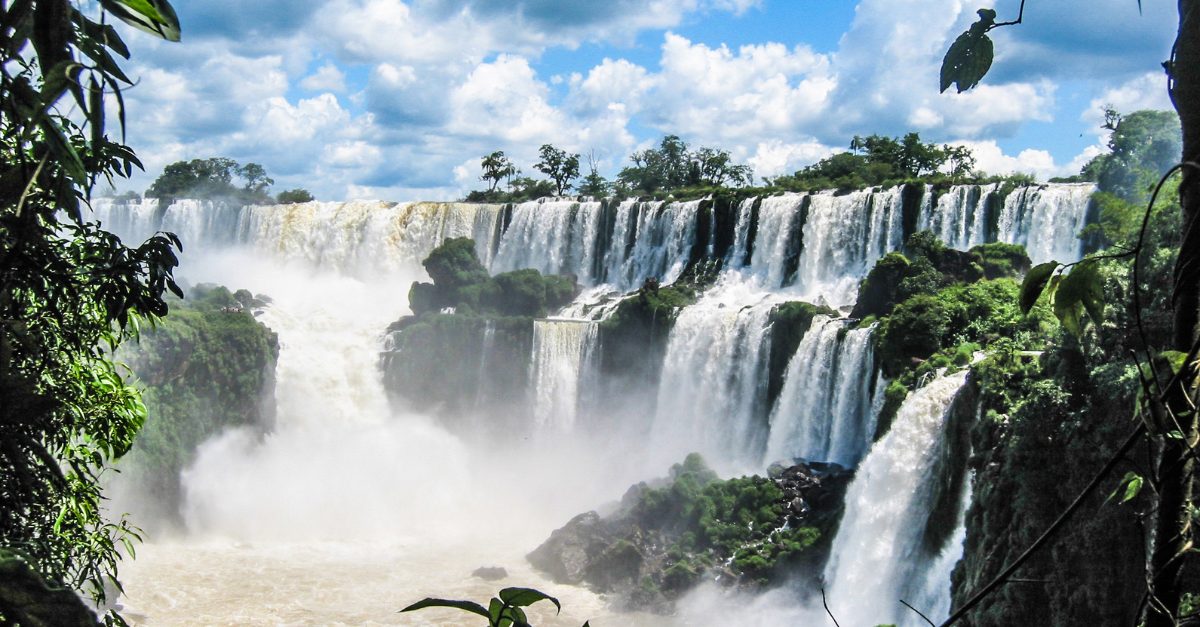
Argentina against Brazil is a great classic, and here both win in different ways. Argentina has the most beautiful geography: you walk through the jungle and stand right over and under the falls. Brazil has the most beautiful views, because its side is right in front of the falls and you see them all at once. To go from one side to the other you cross a bridge over the Iguazú river, which in my experience can also be crossed on foot. The border crossing can take a long time (the press reported delays of up to three hours in June 2026), so leave extra time and check the documents you need.
What to do on the Argentine side
- The upper and lower circuits, with walkways over and below the falls.
- The Garganta del Diablo, the most impressive point, a walkway to the edge of a huge horseshoe-shaped fall.
- Jungle trails and wildlife, such as coatis and birds.
- A boat ride close to the falls, if you want to get wet.
Start early to avoid crowds and heat. Bring a rain jacket, sun protection and insect repellent.
Current status: the Garganta del Diablo is closed
Update (checked 24 Oct 2026): if you are planning your visit for these days, take into account an important weather problem. The Garganta del Diablo circuit and walkway are temporarily closed to the public for safety reasons, because of a strong, preventive rise in the flow of the Iguazú river. A report of 12 October 2026 said the river passed 12,000 cubic meters per second and that the other circuits stayed open. Earlier closures were reported in July and August 2026, when the park took apart the walkways ahead of a forecast flood. I found no official reopening date.
- Boats: the Paseo Ecológico is suspended while the closure lasts, because it leaves from the Garganta del Diablo station, which cannot be used. The Gran Aventura usually keeps running and changes how close it gets to the falls depending on the river flow.
- What to do: check the daily updates on the Iguazú Argentina website, or ask at the Iguazú Jungle offices when you enter the park.
Boat excursions
The operator, Iguazú Jungle, offers different kinds of boat trips:
| Excursion | What it is | Approx. price (ARS) | Restrictions |
|---|---|---|---|
| Gran Aventura | A 5 km ride in an open vehicle along the Yacaratiá trail, then a fast boat that goes close to the foot of the falls (San Martín and Tres Mosqueteros, with a view of the Garganta canyon) | About 90,000 | Not for children under 12, pregnant women, or people with back or heart problems |
| Paseo Ecológico | A calm trip on rowing rafts (inflatable boats) from the Garganta del Diablo station, to see the flora and fauna of the upper islands | About 40,000 | For everyone, no age or health limits |
Prices are approximate and I could not confirm them on the operator’s site on 24 Oct 2026; the under-12 limit and the quiet 30-minute rowing format were confirmed in listings, and the cutoff varies slightly, so check with the operator.
Wildlife and plants
Iguazú National Park protects one of the richest ecosystems in Argentina: the Paranaense rainforest (the Misiones jungle). The humid subtropical climate and the constant spray of the falls make a habitat for thousands of species. Checked on ‘’‘+D+’‘’: the park has more than 450 bird species, and the palo rosa, a giant tree of about 40 meters, with the palmito growing in its shade, is a typical combination.
Animals you may see
- Coatis: the most visible mammals. They walk in family groups and are very bold. Do not feed them or try to touch them, because they have sharp claws and can bite.
- Birds: toucans, dusky swifts that fly and even nest behind the curtains of water, and noisy flocks of parrots.
- Capuchin monkeys (monos caí): they move easily through the treetops beside the walkways of the upper and lower circuits.
- Big predators: the jaguar (yaguareté, a national natural monument), the puma and the ocelot live in the park, but they are nocturnal and very hard to see in the tourist areas.
- Butterflies and reptiles: clouds of colorful butterflies on the wet trails, tegu lizards in the sun and caimans in the calm stretches of the upper Iguazú river.
Plants
- Palo rosa and palmito: the two most emblematic plants. The palo rosa towers over the forest and the palmito grows lower down.
- Orchids and bromeliads: hundreds of epiphytes grow on the branches of the big trees, living off the humidity of the air.
- Giant ferns and vines: they give the dense “jungle” look along the Macuco trail and the access to the boats.
- Ceibo: near the water you see trees adapted to constant flooding, including the ceibo, whose red flower is the national flower of Argentina.
How to get there
- By plane from Buenos Aires to Iguazú, about two hours. This is the easiest way.
- By bus, a very long trip.
- The town is Puerto Iguazú. The park is a short ride from town.
Where to stay in Puerto Iguazú
When to go
- May to August is the most comfortable time.
- September to April is hot and humid, with storms, and I avoid it.
- Water volume changes with the rains and can affect some trails.
See the best time to visit.
Beyond Iguazú
The northeast also has the Esteros del Iberá, a large wetland for wildlife, if you have extra days.
Combining Iguazú with other places
- 10-day itinerary: Buenos Aires, Iguazú and El Calafate.
- 7-day itinerary: swap El Calafate for Iguazú.
- Health: check current advice about insects and vaccines. See the first-timer tips.
I can plan Iguazú around your dates and the best way to see both sides. Plan my trip.
To budget the trip, read the money guide and how many days you need in Argentina.
How much will it cost? See my guide to Argentina travel costs.
By Mariela Cardinale, born in Buenos Aires, historian.
FAQ
How many days do you need for Iguazú Falls?
Two days is ideal: a full day on the Argentine side and a half day on the Brazilian side. One day is possible but rushed.
Argentine side or Brazilian side of Iguazú?
Do both if you can. The Argentine side has more trails and gets you close, including the Garganta del Diablo. The Brazilian side has wide panoramic views.
Is the Garganta del Diablo open?
Not at the moment. Press reports on 12 Oct 2026 said the Garganta del Diablo circuit was closed as a precaution because the river flow passed 12,000 cubic meters per second, while the other circuits stayed open. There is no confirmed reopening date, so check the park's official channels before you plan around it.
Can you take a boat ride at Iguazú?
Yes. The Gran Aventura combines a ride in an open vehicle with a fast boat that goes close to the falls, and the Paseo Ecológico is a quiet rowing-raft trip that leaves from the Garganta del Diablo station. Check which ones are running, since the second one depends on that station.
How do you get to Iguazú from Buenos Aires?
Fly to Iguazú, about two hours. Buses take many hours. Check current options.
What is the best time to visit Iguazú?
May to August, when it is cooler. I avoid Iguazú between September and April because of the heat and the humidity, and water volume changes with the rains.
Do I need a visa for Brazil to see the Brazilian side?
It depends on your nationality, and the rules change. Check the official sources before you travel.