
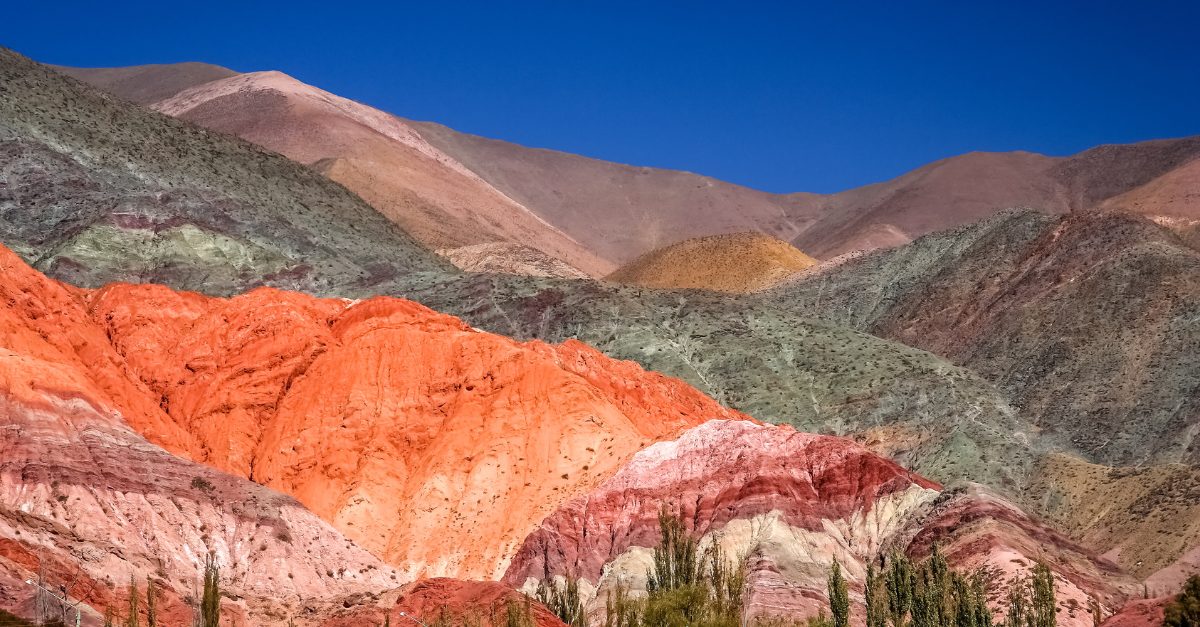
Salta & Jujuy (Northwest Argentina)
Plan 5 to 7 days for Salta and Jujuy. Combine Salta city, Cafayate and the Quebrada de las Conchas, and the Quebrada de Humahuaca with Purmamarca and Tilcara. Go from April to October, rent a car or take tours, and take altitude seriously.
Short answer: give the northwest 5 to 7 days: Salta city, Cafayate (wine and red rock canyons) and the Quebrada de Humahuaca in Jujuy (Purmamarca and Tilcara). Go from April to October, prefer a rental car or tours, and respect altitude.
The northwest is a very different Argentina from Buenos Aires or Patagonia: colorful mountains, adobe villages, Andean culture and wide landscapes. I know Salta and Jujuy from my own trips, and I think it is one of the most underrated regions.
The route
| Days | Where | What |
|---|---|---|
| 1 | Salta | Arrival, the city and its plazas |
| 2 | Cafayate | Quebrada de las Conchas and wineries |
| 3 | Salta or Cachi | Cachi and the mountain roads |
| 4 | Purmamarca | The Hill of Seven Colors and Salinas Grandes |
| 5 | Tilcara and Humahuaca | Villages and viewpoints |
| 6 | Hornocal and return | The 14-color mountain and the road back |
Salta city
A colonial city with plazas, churches, museums and good regional food, such as empanadas salteñas, locro and humita. It is a good base.
Cafayate and the Quebrada de las Conchas
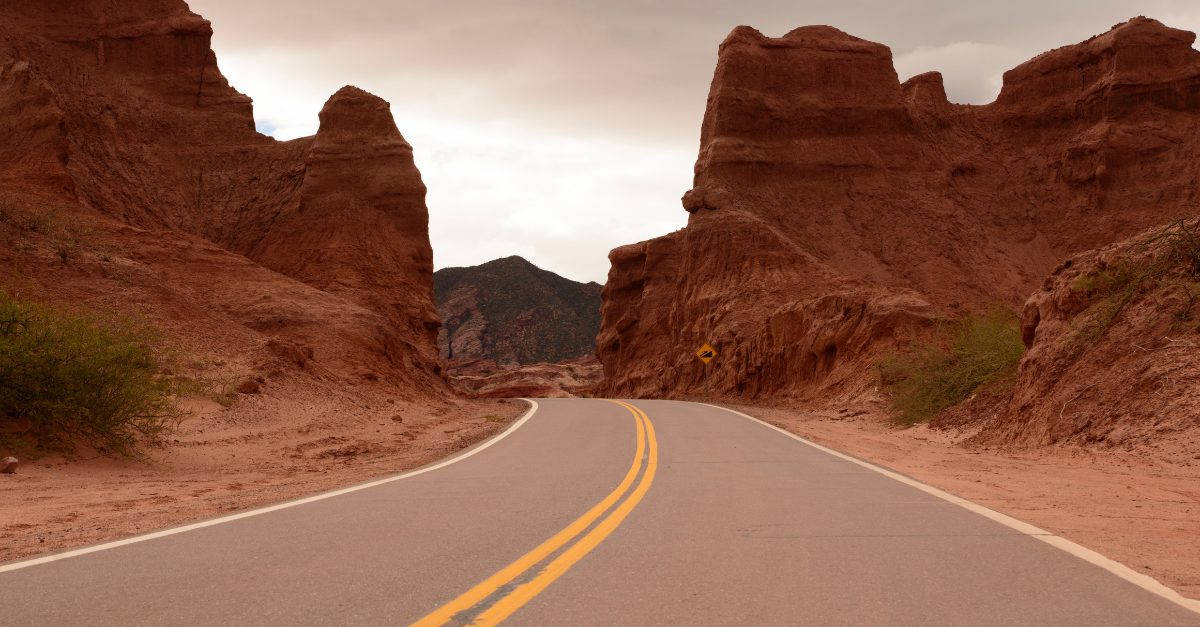
A wine area known for Torrontés, with red rock formations along the road. It is a long drive from Salta, so many people spend a night.
Quebrada de Humahuaca
A UNESCO World Heritage valley in Jujuy:
- Purmamarca and its Hill of Seven Colors.
- Tilcara, with its archaeological site and markets.
- Humahuaca and the Hornocal, a mountain with many colors, at high altitude.
- Salinas Grandes, a vast salt flat.
National parks and protected areas
The northwest has parks that most itineraries skip. These are the main ones (park pages and details checked on 24 Oct 2026 where noted; fees, hours and road conditions change, so check the Parques Nacionales northwest page before you go).
| Area | Province | What it protects |
|---|---|---|
| Los Cardones National Park | Salta | Giant cardón cactus and high-mountain landscapes, in the Calchaquí Valleys |
| Baritú National Park | Salta | Yungas mountain forest in the northeast, hard to reach, a refuge of tapirs and jaguars |
| El Rey National Park | Salta | A transition between the Yungas and the Chaco Serrano, with a lot of wildlife |
| El Nogalar de Los Toldos National Reserve | Salta | Native walnut forests and mountain forest on the border with Bolivia |
| Pizarro National Reserve | Salta | Semi-arid Chaco forest, near General Pizarro |
| Calilegua National Park | Jujuy | Yungas mountain forest, good for birds and hiking |
| Laguna de los Pozuelos Natural Monument | Jujuy | A Puna wetland with thousands of water birds, including flamingos |
Not re-checked on 24 Oct 2026: the descriptions of Baritú, El Nogalar de Los Toldos and Pizarro.
Los Cardones National Park (Salta)
One of the most photographed parks in Argentina: a desert landscape guarded by thousands of giant cacti. It suits families, photographers and people who love big road landscapes.
- How to see it: the park is crossed by the road from Salta to Cachi (Ruta Provincial 33). It climbs through the Cuesta del Obispo from about 1,200 m in the Lerma Valley to more than 3,000 m, and then runs along the Recta del Tin Tin, a long straight stretch said to follow an old Inca road. Most people do it by car or on a tour on the way to the colonial town of Cachi.
- Short walks by the road, easy and low difficulty: Los Secretos del Cardonal, a short walk to understand the cactus ecosystem, and the Ojo de Cóndor viewpoint, a short stop of no more than about 30 minutes. Trail names vary between sources, so ask at the park.
- Logistics: there are no services, so take your own water, food and sun protection, and do not count on mobile signal. Drive slowly on the climb.
Calilegua National Park (Jujuy)
The green, humid and cloudy Yungas mountain forest, a total contrast with the Puna. It is good for eco-tourism, adventure hiking and birdwatching, with more than 350 bird species (some sources say more than 400).
- Trails near the Aguas Negras area include El Pedemontano (it starts about 2 km from the ranger station and reaches a lagoon with herons), Momota and La Herradura (both start at the Aguas Negras campsite), and the hard Tataupá, about 5 hours, near Mesada de las Colmenas.
- Logistics: the Aguas Negras visitor center works as an information and registration point. There is no shop or café, and there is a campsite with basic services. Camping rules have changed in the past after fires, so confirm with the park (calilegua@apn.gob.ar). Fees are set by Parques Nacionales.
- Nearby: crossing the park by Ruta Provincial 83 you reach the community of San Francisco, where guided treks leave for the Termas del Río Jordán, turquoise natural pools in the forest. Not re-checked on 24 Oct 2026.
El Rey National Park (Salta)
An old and very biodiverse reserve in an amphitheater of hills in eastern Salta. It is for travelers who want to go off the beaten track, rough campers and naturalists, and it is known for wildlife.
- Getting there: about 200 km from Salta city. Take Ruta Nacional 9 to Lumbreras, Ruta Provincial 5 to Paso de la Cruz and Ruta Provincial 20 to the entrance. Public transport only reaches Paso de la Cruz. The last part is gravel with several river crossings, and a 4x4 or a high vehicle is recommended.
- When: vehicle access is possible from about April to November. In the rainy season (December to March) the road can become impassable. The park is open every day from 8 to 18 h, and you must register at the park’s operations center.
- Sights: Laguna de los Patitos (water birds), the Chorro de los Loros waterfall (a harder hike), Pozo Verde and the Popayán river.
- Logistics: there is a campsite with toilets and grills, but no shop, no drinking water and no mobile signal. Bring all your food and at least 2 liters of water per person per day.
Checked on 24 Oct 2026 with Parques Nacionales: hours, access, season and logistics of El Rey.
Laguna de los Pozuelos Natural Monument (Jujuy)
A Puna wetland of about 16,000 hectares, protected as a natural monument and recognized as a Ramsar site and a biosphere reserve. It is known for its flamingos. Counts vary by source, from about 25,000 to more than 100,000 birds. Visitors usually come from March to April, after the rains. You get there from San Salvador de Jujuy by Ruta 9 to Abra Pampa and then Ruta Provincial 7. There is no fuel, so fill the tank before. See the official page (checked 24 Oct 2026).
The Tren a las Nubes
The Tren a las Nubes (Train to the Clouds) is the famous high-altitude excursion from Salta. Today the trip combines road and train:
- By bus from Salta to San Antonio de los Cobres. You leave early and stop in villages of the Quebrada del Toro, such as El Alfarcito, to have breakfast and get used to the altitude.
- By train from San Antonio de los Cobres. The train goes to the La Polvorilla viaduct, an impressive piece of engineering at about 4,220 meters above sea level. The train stops so you can get off, take photos and walk in the deep Puna.
- Back. The train returns to San Antonio de los Cobres and you go back to Salta by road.
Prices reported in May 2026 for the bus, train and bus package were from ARS 196,000 for Argentine residents and ARS 218,000 for foreign tourists, with discounts for retirees and minors. Schedules and prices change, so buy your ticket and check the dates on the official site. Many travelers do it on a different day from Los Cardones, since both give you the size and the altitude of the Andean landscape in Salta.
Checked on 24 Oct 2026: the road and train format, the 4,220 meters and the May 2026 prices, from press reports. Not confirmed: the length and height of the viaduct.
Getting around
- Rental car: freedom, but roads are long and winding, and you should check conditions.
- Tours and buses: a good option if you do not want to drive.
- Flights: you can fly to Salta and Jujuy from Buenos Aires.
Altitude
Some places are above 3,000 meters. Take it easy the first day, drink water, avoid heavy meals and alcohol, and consult a doctor if you have health conditions.
When to go
April to October is the dry season, with sunny days and cold nights. Summer has afternoon storms that can cut roads. See the best time to visit.
Combine it
- Replace El Calafate with Salta in the 10-day itinerary.
- See the safety guide and first-timer tips.
I can plan this route with the right pace for altitude. Plan my trip.
To budget the trip, read the money guide and how many days you need in Argentina.
How much will it cost? See my guide to Argentina travel costs.
By Mariela Cardinale, born in Buenos Aires, historian.
FAQ
How many days do you need for Salta and Jujuy?
Five to seven days. Four days is possible, but you will see less and spend more time on the road.
What is the best time to visit Salta and Jujuy?
April to October, the dry season, with sunny days and cold nights. Summer has rain.
Do I need a car in northwest Argentina?
A rental car gives you the most freedom, but tours and buses are also possible. Roads can be long and winding.
Is altitude a problem in the northwest?
It can be. Some places are over 3,000 meters. Take it easy on the first day, drink water and avoid heavy meals and alcohol.
Which national parks are in Salta and Jujuy?
In Salta: Los Cardones, Baritú, El Rey, and the reserves El Nogalar de Los Toldos and Pizarro. In Jujuy: Calilegua and the Laguna de los Pozuelos natural monument. Los Cardones is the easiest to visit, on the way to Cachi. Checked 24 Oct 2026 for Los Cardones, El Rey, Calilegua and Pozuelos.
How does the Tren a las Nubes work today?
The trip combines road and train. A bus takes you from Salta to San Antonio de los Cobres, and there you board the train to the La Polvorilla viaduct, at about 4,220 meters. Then you return to Salta by road. Check schedules and prices on the official site.
What is Quebrada de Humahuaca?
A colorful mountain valley in Jujuy with villages such as Purmamarca, Tilcara and Humahuaca. It is a UNESCO World Heritage site.