
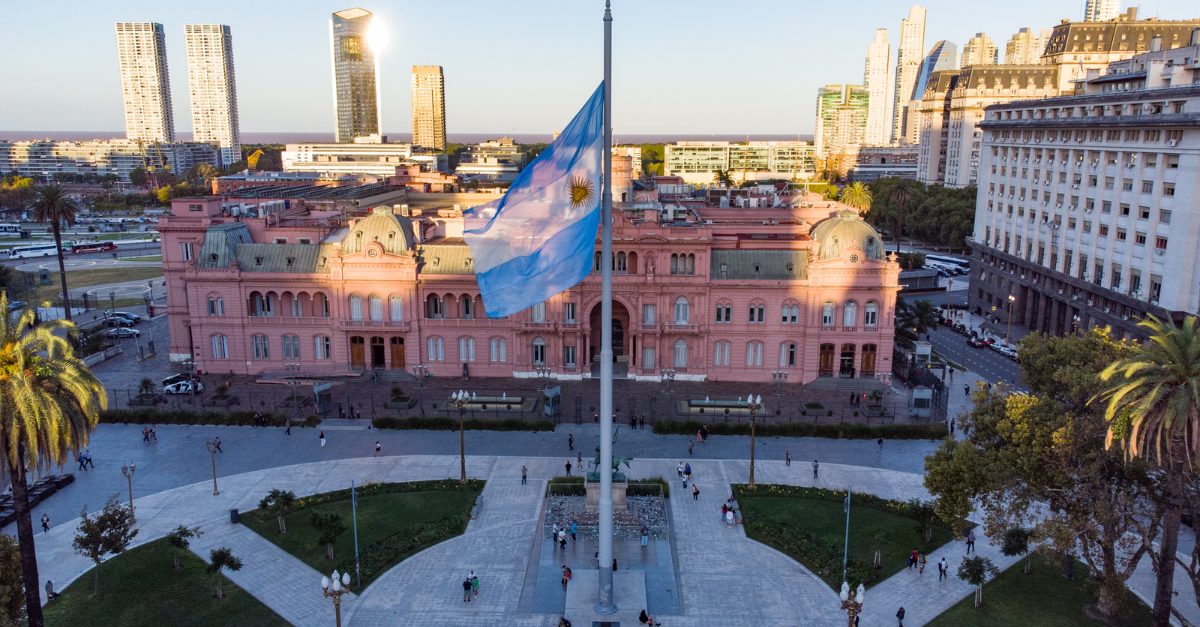
Money in Argentina (2026): Cash, Cards, Blue Dollar & ATMs Explained by a Local
The gap between the blue dollar and the official rate changes, and in mid-November 2026 the blue rose sharply, so check today's rates on Dolarito before you decide. You do not need a stack of cash: the simplest way to pay is a multi-currency account like Wise or a no-fee card, always paying in pesos, plus a little cash for tips.
TL;DR (rates checked 11 and 18 Nov 2026): The gap between the blue and the official rate changes, and it widened in mid-November, so check today’s rates on Dolarito before you decide. The simplest way to pay is a Wise account: convert to pesos in the app and pay with your Wise card or phone. Always pay in pesos (ARS), never in dollars. Bring a little cash for tips.
| Rate (snapshot, 11 Nov 2026) | ARS per USD |
|---|---|
| Official (Banco Nación, sell) | 1,570 |
| MEP | about 1,571 |
| Blue (sell) | about 1,555 to 1,565 |
| Gap blue vs official | none on 11 Nov; it widened afterwards |
This table is a snapshot from before the blue rose. The blue rose sharply afterwards, and I did not update the other rates. Sources for 11 Nov 2026: Cronista, Ámbito and El Litoral. The blue varies by source and time of day. Rates change every day: for today’s numbers, use Dolarito, which shows the official, MEP, blue and other rates side by side (it is in Spanish).
If you read an Argentina money guide from a few years ago, it told you to bring a thick envelope of US dollars and change it on the street. That advice is outdated when the gap is small, but the gap can open again, so check the rates. I was born in Buenos Aires, lived there for 53 years and went through more than one exchange-rate crisis. Here is what actually works today.
Is the blue dollar still a thing in 2026?
Yes, it exists, and whether it pays off depends on the day. The “blue dollar” is the parallel exchange rate that grew while Argentina restricted access to dollars (the cepo). The restrictions were largely lifted in April 2025, and the gap with the official rate has been closing since. In early November 2026 it had almost disappeared, with the blue level with the official rate. Then, in mid-November, the blue rose sharply, so the gap moves and I do not give a fixed number.
Official, MEP, blue and CCL: the rates in one table
| Rate | What it is | What it means for you |
|---|---|---|
| Official | The bank rate. | Reference price. Foreign cards no longer use it as they once did. |
| MEP | A legal rate from buying dollars with pesos through the stock market. | Close to what foreign cards are charged. |
| Blue | The informal market rate. | Can be above the others when the gap opens. Check Dolarito. |
| CCL | A rate for moving money abroad. | Not relevant for tourists. |
Why old guides still say “bring cash”
Because for years it was true. During the currency controls of 2011 to 2015 and again from 2019 to 2025, the gap reached 50% or more. Many blogs were never updated. If a guide doesn’t mention the date it was checked, be careful.
The easiest way to pay in Argentina: a Wise account and card
If you want one answer, this is mine. Wise is a multi-currency account that you can open online for free in many countries, including the United States. You load US dollars (or euros, pounds and others), convert to Argentine pesos inside the app, and pay in pesos with the Wise card or from Apple Pay or Google Pay.
Disclosure: this is my personal Wise referral link. If you sign up through it, I may get a reward, and you may get a perk, at no extra cost to you. I recommend Wise because I use it. See my affiliate disclosure.
Step by step
- Open the account online and verify your identity.
- Choose how you pay: order the physical card (in the United States it costs a one-time USD 9), or add the digital card to Apple Pay or Google Pay and tap to pay with your phone (NFC). You can do both.
- Add money in your own currency, from your bank account or card, right inside the Wise app.
- Convert to Argentine pesos inside the app. Wise brought back holding and converting to pesos in October 2025.
- Pay in pesos. Spending a currency you already hold in your balance is free. Keep a backup card.
Wise’s calculator showed about 2% to convert to pesos on 22 Oct 2026, more than the low percentage in Wise’s advertising, so check the calculator for the day you convert.
What it costs in your country
You can open the account in all five main English-speaking markets, and the digital cards are free and work with Apple Pay and Google Pay. What changes is the price of the physical card and how much you can withdraw for free at ATMs each month (checked 22 October 2026):
| Where you live | Physical card | Free ATM withdrawals per month |
|---|---|---|
| United States | USD 9 | USD 250 |
| United Kingdom | GBP 7 | GBP 250 |
| European Union | EUR 7 | EUR 250 |
| Canada | Free | CAD 100 |
| Australia | AUD 10 | AUD 400 |
Wise vs a no-fee credit card vs cash
| Wise | No-foreign-fee credit card | Revolut | Cash USD | |
|---|---|---|---|---|
| Rate | Mid-market rate plus a small fee | Close to MEP, plus any bank fee | 1% surcharge on weekend currency exchange on the free plan (checked 24 Oct 2026) | Depends on the exchange house |
| Safety | Card can be frozen from the app | Fraud protection | Not checked | If it’s stolen, it’s gone |
| Accepted at | Most card terminals and contactless; small shops may only take cash | Most card terminals | Card terminals, Google Wallet (Android) and Apple Pay (iPhone), tested by me | Where accepted, compare with the peso price |
Limits and caveats
- ATMs: Banelco and Red Link machines accept the card, but they charge their own fee and let you take out only a small amount at a time, on top of Wise’s monthly free limit. ATM amounts not checked (24 Oct 2026): fees change often and vary by bank, so read the fee screen before you accept.
- Contactless acceptance at Argentine terminals not checked (24 Oct 2026). Always carry a backup card and a little cash in case a terminal rejects it.
Revolut as a second option
Revolut is another multi-currency app. It is a secondary option for me: I use it, but Wise stays my first choice. I have no referral or affiliate link with Revolut, so the link below is a plain one: revolut.com.
- Where you can open an account: residents of the US, UK, EEA and Australia. Revolut does not open accounts for residents of Canada (checked in Revolut’s help center on 24 Oct 2026).
- Pesos: I can hold and exchange pesos (ARS) in the app from Spain. Availability may vary by country of residence and plan, so check your app before you travel. I can’t say it works the same in every country.
- Paying with your phone: it works with Google Wallet on Android and with Apple Pay on iPhone. My son and I both tested it.
- Pay in pesos: as with Wise, always choose ARS and decline the conversion offer (DCC).
ATM withdrawals on the free plan (checked 24 Oct 2026; fees vary by plan and country, check the app):
- UK and EU: free up to £200 / €200 or 5 withdrawals per month; after that, 2% (minimum £1 / €1).
- Australia: free up to A$350 or 5 withdrawals per month.
- US: 2% at ATMs outside its network, and the ones in Argentina are not in its network.
- Currency exchange on weekends: 1% surcharge on the free plan.
- The Argentine ATM charges its own fee on top, which Revolut does not control.
Update: Revolut announced that Argentina’s central bank approved, on 24 Sep 2026, its purchase of an Argentine bank (Banco Cetelem Argentina), and that it plans to launch services there (press coverage). I’ll update this page when it does.
What exchange rate do tourists get with a foreign card?
Foreign Visa and Mastercard purchases are charged at a rate close to the dólar MEP (the legal stock-market dollar rate, about ARS 1,571 on 11 November 2026), not at the “dólar tarjeta” you see in Argentine newspapers. That higher figure (about ARS 2,015 in October 2026) is for Argentine residents spending abroad, not for you. Check your first statement to confirm the rate your bank applied.
Credit or debit?
Bring a credit card with no foreign transaction fee as your main card, and a second card as a backup. Tell your bank you are traveling.
Should I pay in pesos or dollars? Always pesos
If a terminal, an ATM or a hotel offers to charge you in your home currency or in dollars, that is dynamic currency conversion (DCC), and the rate is worse. Choose ARS and let your bank or Wise convert.
One myth to put to rest is that Argentina charges tourists a “30% extra” on foreign cards. The PAIS tax ended on 22 December 2024. The 30% perception that still exists applies to Argentine residents who pay abroad or in foreign currency. As of October 2026, foreign tourists paying in pesos with a foreign card are not charged it.
Paying in cash dollars is fine where it is accepted at a fair rate, such as some hotels or tours, but always compare it with the peso price.
Should I bring US dollars in cash?
A little, yes. Cash is useful for tips, taxis, street fairs, small towns and as a backup if your card is blocked. You don’t need much. Bring clean, new notes: exchange houses pay less for old, marked or small-face bills. If you carry more than USD 10,000 you must declare it at customs.
Where to exchange
Use a licensed casa de cambio or a bank. Avoid the airport, count your money before you leave the counter, and be wary of anyone offering a rate that looks too good.
Also avoid the arbolitos (“little trees”) on Calle Florida in Buenos Aires. They are the people who stand on the street calling out “cambio, cambio”. They work with local exchange houses and their job is to bring in tourists who need to change money. It is not entirely safe, and there are safe, transparent ways to do it: a licensed casa de cambio or a bank. More first-trip pitfalls in what not to do in Argentina.
Are ATMs in Argentina worth it?
They are the most expensive way to get cash. Argentine ATMs (Banelco and Red Link) charge a high fixed fee per withdrawal and have a low limit per transaction, so you pay the fee several times for a small amount. Fees change often and vary by bank: read the fee screen before you accept. Use machines inside bank branches, withdraw the maximum each time, and don’t count on finding an ATM in small towns in the Andes or Patagonia.
Is Western Union still the best way to get pesos?
Not anymore. It used to beat the official rate by a wide margin, but now the difference from a card is small, around 1% to 2%. It can still make sense if you need a large amount of cash on a long trip: you send the money to yourself and collect it with your passport, but expect queues and opening hours.
How to save 21% at hotels: the VAT exemption for foreigners
Hotels normally add 21% VAT to the bill. Non-resident tourists who pay with a foreign card or a transfer from abroad can be exempt. Ask for it when you book, bring your passport and confirm it at check-in, since the rule can change.
Is Argentina expensive in 2026?
It has become more expensive in dollars. Prices rose with inflation while the official rate moved much less, so what was very cheap a few years ago is now closer to a normal European or US city in many places. For daily budgets by travel style, see Argentina travel costs. To plan the length of your stay, see how many days you need in Argentina.
Tipping in Argentina
In restaurants, around 10% is customary, ideally in cash. The cubierto on your bill is a cover charge, not a tip. Tip guides, drivers and hotel staff a small amount in cash. Taxis and ride apps don’t need a tip.
A practical money plan for a 2-week trip
- Main payment: a Wise account and card, paying in pesos.
- One no-fee credit card as backup, and a second backup card kept separately.
- A small amount of clean USD cash, plus some pesos for tips.
- Pick your dates first: see the best time to visit Argentina.
- Check today’s rates on Dolarito (in Spanish) if you want to compare.
By Mariela Cardinale, born in Buenos Aires, historian.
FAQ
Is it better to use cash or card in Argentina in 2026?
Card, for most things. A foreign card or a Wise account is simple and safe. If the blue dollar is clearly above the rate your card gets, cash dollars can give you more pesos, so check the rates on Dolarito. Carry some pesos or dollars for tips, small purchases and places that don't take cards.
What is the blue dollar rate today?
It changes every day, so I do not give a fixed number here. On 11 November 2026 the blue was about ARS 1,555 to 1,565, close to the official ARS 1,570. A few days later it rose sharply. Check Dolarito (in Spanish) for today's number.
What exchange rate do foreign credit cards get in Argentina?
Foreign Visa and Mastercard purchases are generally charged at a rate close to the dólar MEP rate, not the old, much worse official rate. The exact rate depends on the card network and your bank, so check your first statement.
Is the blue dollar still worth it in Argentina?
It depends on the day. When the blue is close to the official rate, changing cash on the street gets you no better rate than a card, and it adds risk. When the gap opens, as in mid-November 2026, it can be worth comparing. Check the rates on Dolarito, and use a licensed place, not the street, if you decide to change cash.
Where is the best place to change money in Argentina?
You do not need to change much. Pay by card in pesos, and if you need cash, use a licensed casa de cambio or a bank, not the street money changers. Avoid the airport counters and count your money before you leave the counter.
Should I exchange money before traveling to Argentina?
No. You won't find a good rate for Argentine pesos outside the country. Arrive with a card or Wise account, and bring some US dollars in clean notes as a backup.
Can I pay in US dollars in Argentina?
Some hotels and tour operators accept dollars, but you should compare against the peso price. For card payments, always choose to pay in pesos, never in dollars.
How much do ATMs charge foreigners in Argentina?
ATMs charge a high fixed fee per withdrawal and have a low limit per transaction, so you pay the fee several times for a small amount. Fees change often and vary by bank, so check the fee screen before you accept.
Is Western Union still worth it in Argentina?
Rarely. It used to beat the official rate by a wide margin, but now the gap is small and a card or Wise account is easier. It can still make sense for large amounts of cash on a long trip.
Do hotels in Argentina charge VAT to foreign tourists?
Hotels normally add 21% VAT, but non-resident tourists who pay with a foreign card or transfer from abroad may be exempt. Show your passport at check-in and confirm the rule is still in force when you book.
How much should I tip in Argentina?
In restaurants, around 10% is customary, ideally in cash. The 'cubierto' on your bill is a cover charge, not a tip. Tip guides and hotel staff a small amount in cash.
Does Wise work in Argentina?
Yes. You can open an account in the US, UK, EU, Canada and Australia, convert to pesos in the app (Wise re-enabled this in October 2025) and pay with the card. Wise's calculator showed about 2% on 22 Oct 2026. The card price and free ATM limit vary by country.
Does Revolut work in Argentina?
In my experience, yes. From Spain I can hold and exchange pesos in the Revolut app, and the card works with Google Wallet on Android and Apple Pay on iPhone. Availability can vary by country of residence and plan, so check the app. Pay in pesos and decline any conversion offer. Checked 24 Oct 2026.
Why are street money changers in Buenos Aires called "arbolitos"?
This is the explanation I grew up with, from my own memory. In the 1970s the US dollar was called the "verde" (green), and people said "en verdes". Changing dollars was the most common thing to ask for, and the place to look for it was Calle Florida, where people stood still on the street saying "cambio, cambio". They became known as "arbolitos" (little trees), and the word spread across the country, even to the TV news. Changing money on the street was against the rules, and back then they exchanged it right there on the pavement. Today they usually bring you to an exchange house, so use a licensed casa de cambio or a bank.
Should I pay in pesos or US dollars in Argentina?
Pesos, always. If a terminal offers to charge you in your home currency, that is dynamic currency conversion and the rate is worse. Choose ARS and let your bank or Wise convert.
Is there a tax on foreign cards in Argentina (impuesto PAIS / 30% surcharge)?
Not for tourists. The PAIS tax ended on 22 December 2024. The 30% perception that still exists applies to Argentine residents spending abroad. Foreign tourists paying in pesos with a foreign card are not charged it.
How far does the US dollar go in Argentina?
Less than a few years ago: prices rose faster than the official rate. As a rough guide, plan on about US$45 to 65 a day on a backpacker budget, US$90 to 150 mid-range and US$180 to 300 for a comfortable trip. See my Argentina travel costs guide for details.